01
The gimbal
A lightweight 2-axis gimbal, designed and printed to hold the FPV camera at the front of the frame, built for durability in crashes and smooth motion.
An FPV drone whose camera turns with the pilot's head.
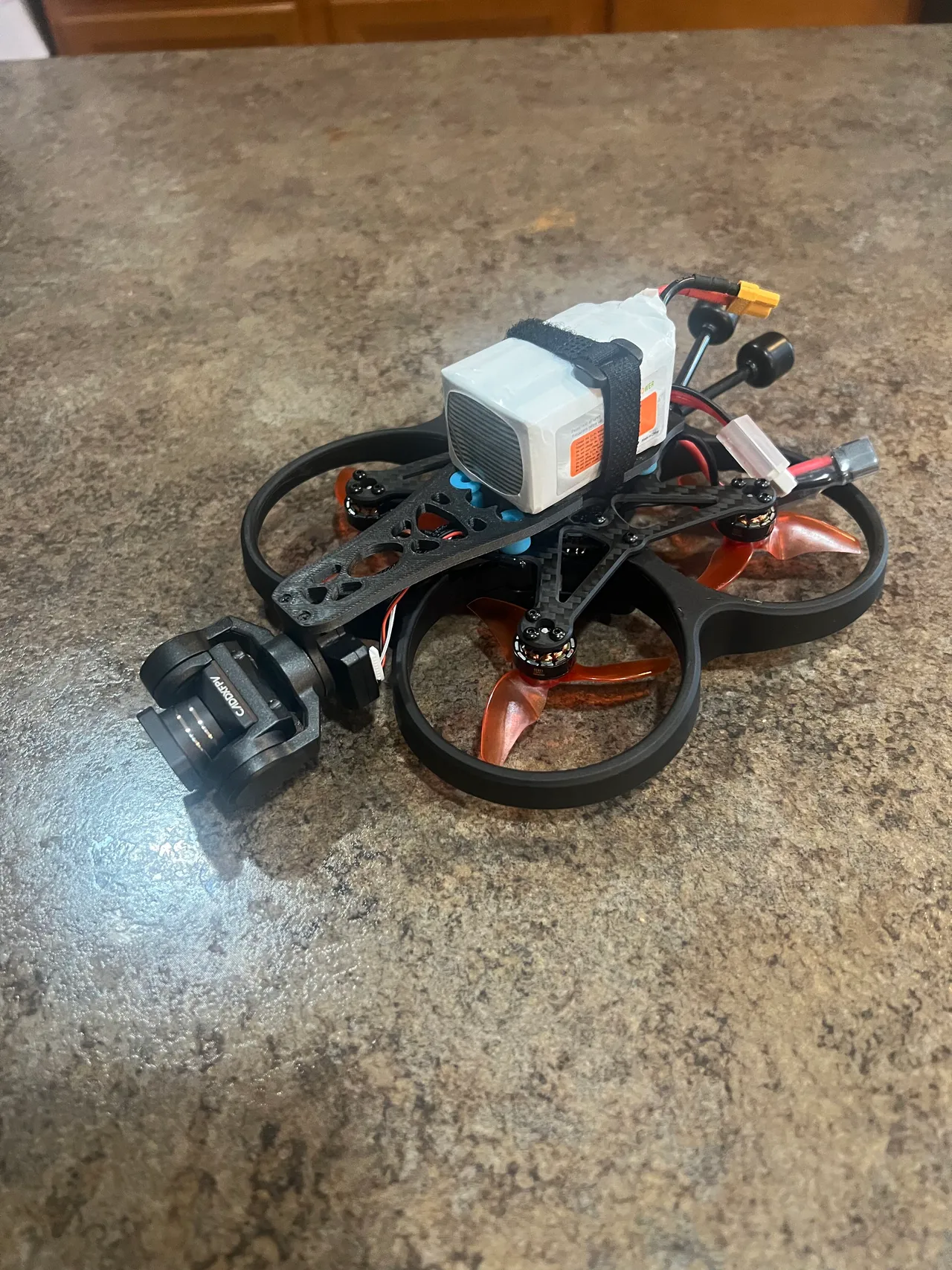
Normal FPV cameras are fixed to the frame, so the pilot can only look where the drone points. I put the camera on a 2-axis gimbal driven by a head tracker in the goggles, so the pilot can look around freely while flying.
A lightweight 2-axis gimbal, designed and printed to hold the FPV camera at the front of the frame, built for durability in crashes and smooth motion.
An IMU in the goggles measures head orientation. That signal goes into the radio, over the control link to the flight controller, and out to the gimbal servos as passthrough channels. Custom mixing maps head angles to servo positions, and the path was kept short to minimise lag between moving your head and the view changing.